When U.S. Politics Reach Honduras
There is a common saying that when the U.S. sneezes, the world catches a cold. This has felt particularly true in Honduras this year, as 2025 both began and now ends in deep political uncertainty due to U.S. influence.
We want to briefly share what is happening in Honduras, how it affects Chispa’s work, and the sadness our team carries for a country we love deeply. What we offer here is what we are seeing through our work and relationships, and we ask for your prayers and positive thoughts during this trying time. Please feel free to reach out to us with questions after reading.
Earlier this year, we shared how the loss of U.S. funding through USAID affected Honduras and Chispa Project. Now, on November 30th, Honduras held presidential elections. Because of an extremely narrow margin, final results have still not been announced. Accusations of U.S. interference have intensified tensions, and many Hondurans describe the current situation as an “electoral coup.”
To understand why this moment feels so heavy, it helps to step back and look at the broader context. Honduras is a small country of roughly 11 million people, and we are often asked:
WHY DOES HONDURAS MATTER SO MUCH TO THE UNITED STATES?
Economic interests:
The U.S. has long profited from private investments in Honduras, dating back to its history as a so-called “Banana Republic.” Today, Honduras remains a major exporter of bananas and coffee, and U.S. corporate interests continue in energy, infrastructure, and manufacturing. Companies such as Fruit of the Loom, Gap, Nike, Walmart, and Target rely on Honduran labor and production. These economic interests inevitably influence political decisions.
Geopolitical influence:
The U.S. has sought to counter growing Chinese economic and political presence in Central America. Since the Contra wars of the 1980s and 1990s, Honduras has been heavily militarized under the banner of combating communism and protecting U.S. investments in the region.
Strategic location:
Situated in the center of Central America, Honduras is a key corridor for migration and drug trafficking routes. It also hosts the largest U.S. military base in Latin America, making it strategically significant for regional control and influence.
For over a century, U.S. involvement in Honduran politics has shaped the country’s trajectory, beginning with the United Fruit Company and continuing through modern trade and security agreements. Deep political corruption within Honduras has made the country especially vulnerable to outside pressure. Honduran leaders and U.S. politicians alike have often used this dependency for personal and political gain—and Hondurans are keenly aware of it.
THIS HISTORY IS NOT ABSTRACT FOR US. WE HAVE LIVED IT.
In 2009, during the Obama administration, a coup ousted Honduran president Mel Zelaya. The U.S. failure to take a strong stance and its eventual recognition of the post-coup elections signaled acceptance to the coup leaders and weakened international pressure for Zelaya’s reinstatement.
In 2012, President Juan Orlando Hernández removed and replaced the Supreme Court with loyalists, overturning the constitution’s strict prohibition on presidential re-election. In 2017, despite widespread evidence of electoral fraud and international condemnation, the Trump administration supported Hernández’s re-election. We remember watching armed military trucks roll into small towns to “protect” votes. The capital city was placed under military lockdown after dark. Each night at 7 p.m., we leaned out our windows banging pots and pans in protest, as official election results were delayed for more than a month, ultimately keeping Hernández in power.
In 2022, after the largest voter turnout in Honduran history, Hernández finally stepped down. He was later extradited to the U.S. on drug trafficking and weapons charges. He lived in the same neighborhood as the Chispa office. Once again, we leaned out our windows, this time cheering, as the police motorcade took him away. He was convicted and sentenced to 45 years in U.S. prison.
Then, just days before this 2025 election, former President Trump publicly endorsed conservative candidate Nasry Asfura, from the same political party as Hernández. Trump stated he would “only work with” Asfura and threatened to cut off U.S. aid to Honduras if Asfura was not elected. At the same time, Trump issued a full and unconditional pardon for Hernández, releasing him from prison. This is one of the most overt acts of U.S. interference in a Latin American election in recent history.
These actions matter deeply because one in ten Hondurans live in the United States, sending money home to support family members. Remittances make up nearly 30% of Honduras’s GDP. Any shift in U.S. immigration policy—or threats of mass deportation—has immediate and devastating economic consequences for Honduran families. This fear was evident in public opinion polls, which showed a significant late shift toward Trump’s endorsed candidate. As of now, the country is still waiting for final election results.
HOW THIS AFFECTS CHISPA
This is a profoundly difficult season for Honduras—and for our Honduran colleagues, partners, and friends. The uncertainty, emotional strain, and sporadic violence take a real toll on their mental health and physical safety. Political unrest disrupts daily life in ways that are hard to convey from afar.
Government transitions always ripple into schools. A new administration will take office at the end of January, just as the school year begins in February. Historically, the first half of the school year brings widespread turnover in teachers and administrators, with positions often reassigned based on political loyalty rather than experience. These changes disrupt classrooms, relationships, and carefully laid plans—including Chispa libraries and reading programs that depend on stability and trust.
And yet, even in this uncertainty, our team shows up. They keep opening library doors. They keep welcoming children. They keep believing that books, stories, and safe learning spaces matter—especially when everything else feels fragile.
STANDING WITH HONDURAS
We share all of this not to overwhelm, but to invite you into honest solidarity. Honduras is hurting. Our team is tired. And still, hope persists—in classrooms, in stories read aloud, in the quiet courage of people who refuse to give up on their country or their children.
Thank you for standing with Chispa and with Honduras during this difficult chapter. Thank you for your prayers, your messages, and your continued trust. In moments like these, we are reminded that change does not only come through politics, but through presence—through choosing to stay, to care, and to believe that the light of chispa still finds its way through the cracks.
Los libros cambian la historia.
Books change the story.
UPDATE 1/28/2026:
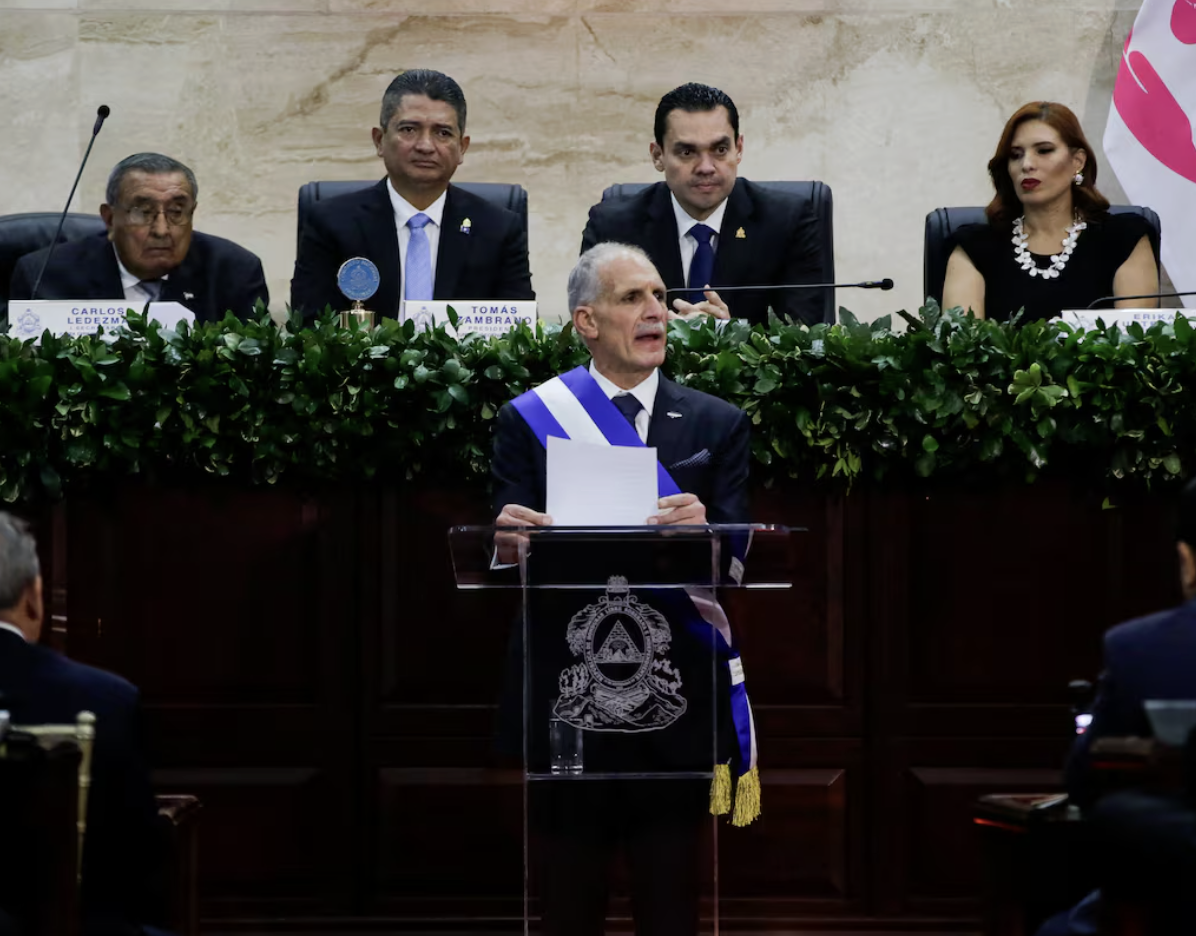
Yesterday, following a closely contested election period, Honduras welcomed a new president. Conservative candidate Nasry Asfura was sworn into office, pledging to prioritize economic recovery and address concerns related to corruption and public security. We are grateful for the peaceful transition of power in this complicated election.
Read more here:
Even as political leadership changes, the everyday reality of the communities we reach continues to guide our work at Chispa Project. Motivated by our belief that books change the story, we are on track to reach more students, support more schools, and build more partnerships than ever before in 2026!