The True Cost of a Library
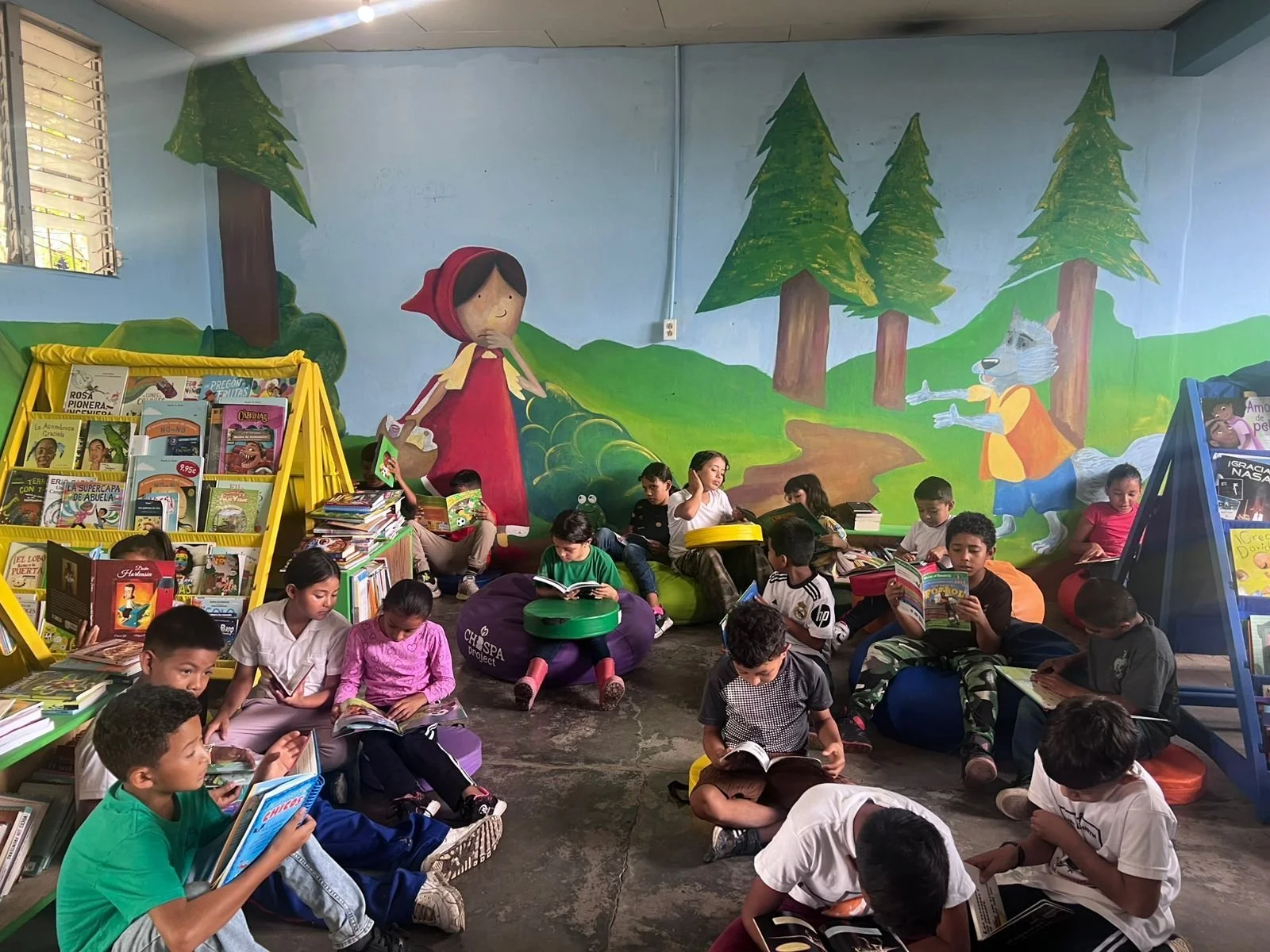
Students at Ivan Betancourth Elementary School in Comayagua, Honduras enjoying their new library, installed in July 2025.
What Does a School Library Really Cost?
At first glance, the cost of a school library might seem straightforward—books, shelves, and a little paint on the walls. But the true cost of creating a space that sparks a lifelong love of reading goes far beyond the physical items that fill the room. At Chispa Project, every library we create represents an investment in people, sustainability, and long-term impact.
There are some key elements to every library that are reflected in each project’s budget.
We ensure a 2:1 ratio of books to students, which ensures a healthy collection of stories for kids to choose from. But, to keep things in perspective, the average school library in the United States has a ratio that is closer to 20 books: 1 student.
We include vibrant murals with literacy-related images to motivate students to read, hand-painted by volunteers
We provide training to both teachers and parents on research-based literacy techniques
We host an inauguration fair where teachers lead students in literacy-based activities to get the whole community excited about their new library (and practicing some of the techniques learned in training)
We include library infrastructure, like comfortable seating options and custom-made bookshelves
We promise 2 years of visits to the schools to provide follow-up and coaching to teachers and administrators. While some schools are in or around Tegucigalpa where Chispa is headquartered, other schools are over 8 hours away from our office.
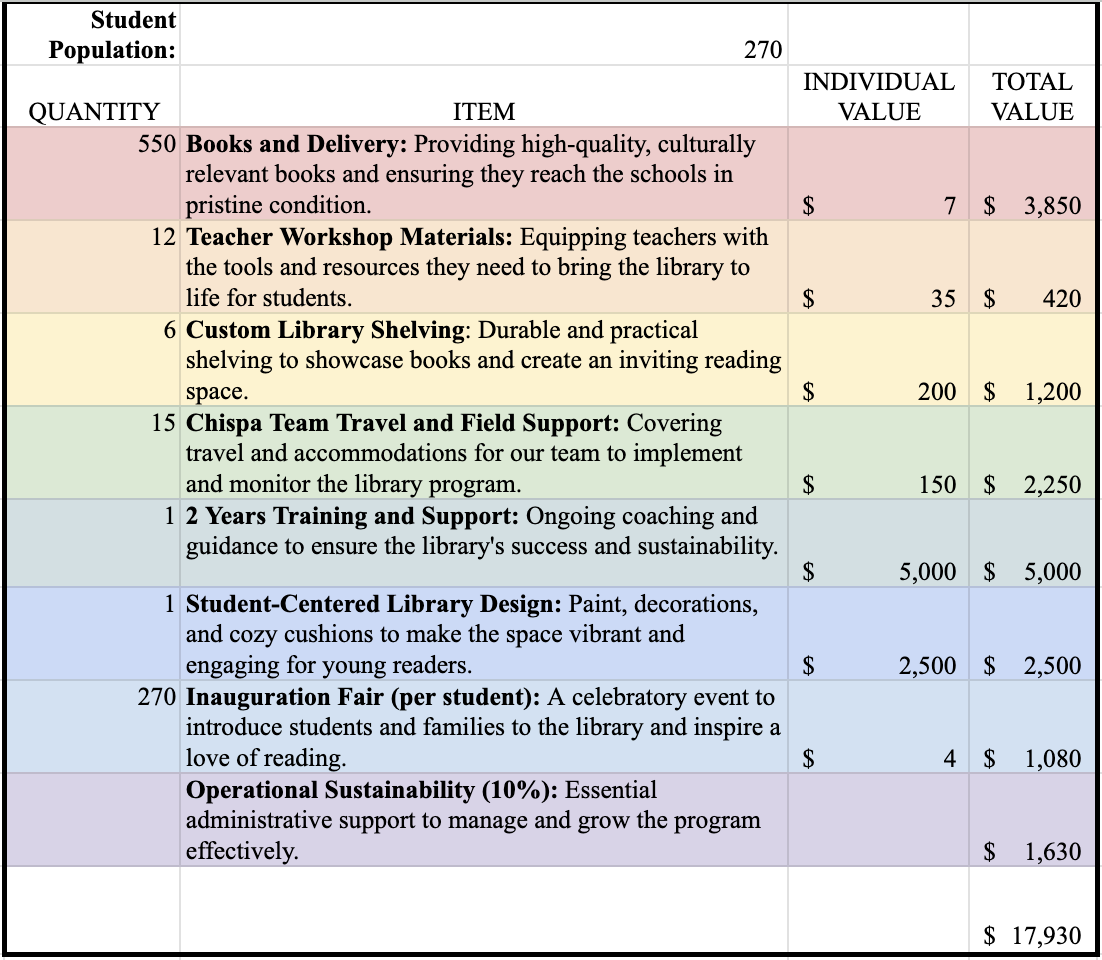
This is an example of a pretty average-sized school library budget, including a 2:1 book to student ratio, training for teachers and parents, library infrastructure and design, and 2 years of follow-up support for the educational community.
Rising Costs, Deeper Commitment
In recent years, inflation and global shipping challenges have drastically changed the economics of our work. Shipping prices alone have increased by 50%, meaning every book and resource costs more to get where it’s needed. Beyond that, we’ve doubled our commitment to each school, extending our follow-up support from one year to two. This ensures that each library remains active and vibrant for years to come because a culture of reading has had the time to take root.
Investing in Quality and Local Talent
Our focus on quality has grown along with our mission. Today, each library includes high-quality murals, comfortable reading spaces, and handmade furniture. We’re proud to partner with local woodworkers and businesses who craft bookshelves and our pouf cushions, supporting the local economy and ensuring that each library reflects the creativity of its own community. These aren’t mass-produced materials; they’re made with care, purpose, and pride, and they’re tailored to the unique environment in Honduras. For example, our bookshelves are designed with a fabric cover that can be rolled out over the books - this protects the books from the dust and humidity in Honduras.
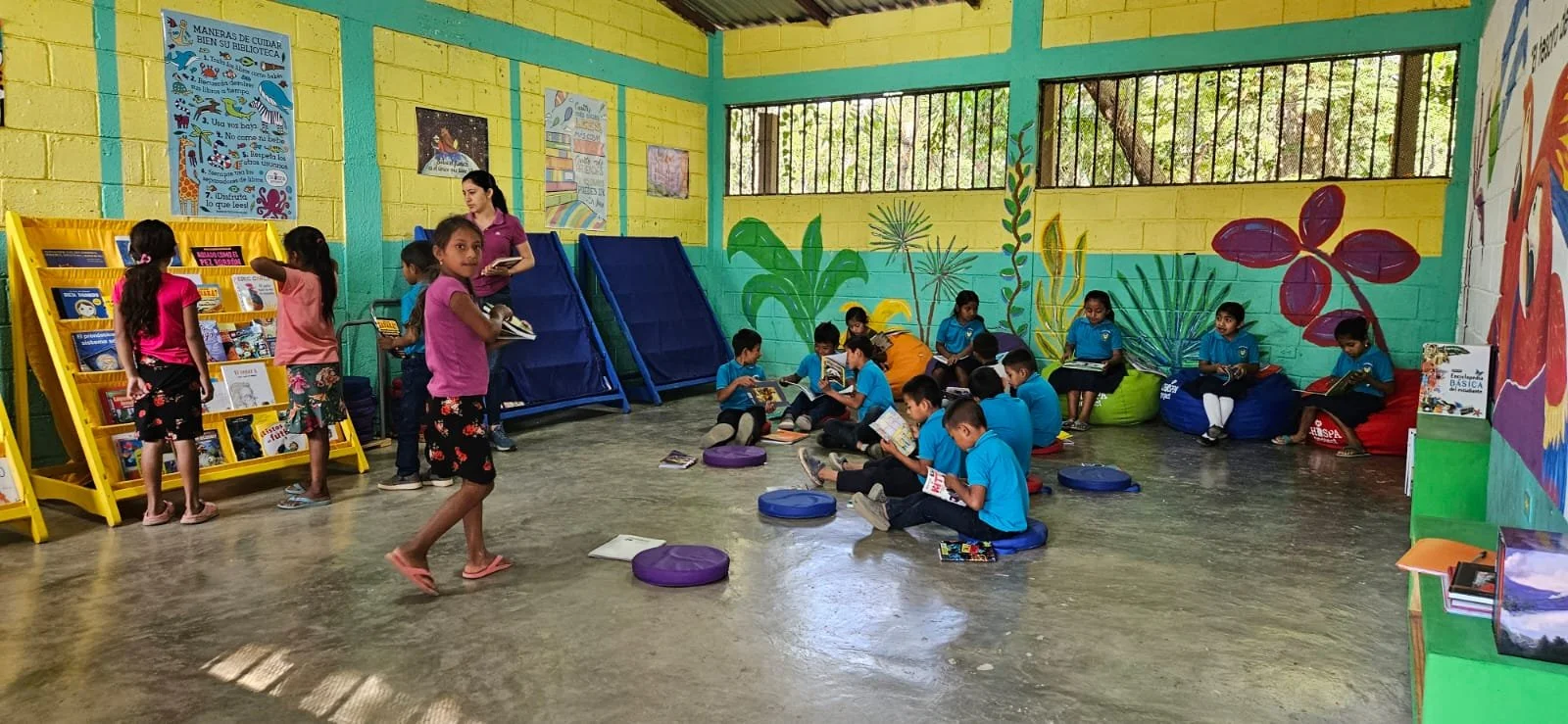
The blue bookshelves in this picture illustrate how the fabric cover protects the books when they are not in use.
More Resources, More Hands, More Heart
With our programs expanding in depth and impact, so too has our team. Where one or two people once handled installations, we now have teams of four to five staff members coordinating training, follow-ups, coaching, and data collection at at least 10 schools a year, on top of the support they provide for other projects and initiatives. This growth allows us to provide better support to schools and students while offering fair wages, professional growth, and benefits to our team, values that align with our commitment to sustainability not just in materials, but in people.
Digging Roots, Not Just Branches
As Chispa Project continues to grow, we’re learning that sustainability means digging roots deeper instead of branching wider. Each library becomes a long-term partnership with a school and its community: an ongoing relationship built on trust, training, and shared vision. The true cost of a library isn’t measured in dollars, but in the strength of these connections and the futures they help shape.
